Explore the History of the Dresden Plate Quilt Block
The History of the Dresden Plate Quilt Block
There are some quilt blocks that seem to have a timeless charm, and the Dresden Plate is certainly one of them. With its beautiful arrangement of fabric blades radiating outward like the petals of a flower, it’s a design that has found its way into quilts for generations.
You may recognize the Dresden Plate for its classic floral appearance, but have you ever wondered how it got its name or where the design originated? Its history is an interesting blend of European artistry, American quilting traditions, and the creativity of quilters who found beauty in even the smallest pieces of fabric.
A Name Inspired by German Porcelain
The Dresden Plate takes its name from Dresden, Germany, a city well known for its beautiful porcelain.
During the 18th and 19th centuries, Dresden became an important center for porcelain decoration. Skilled artists hand-painted delicate flowers, fruits, and foliage onto fine china, often finishing the pieces with elaborate details and ornate gold accents. These decorative plates and other porcelain pieces became highly regarded for their craftsmanship and beauty.
The floral arrangements and decorative shapes found on Dresden porcelain are believed to have inspired the quilt design we know today as the Dresden Plate.
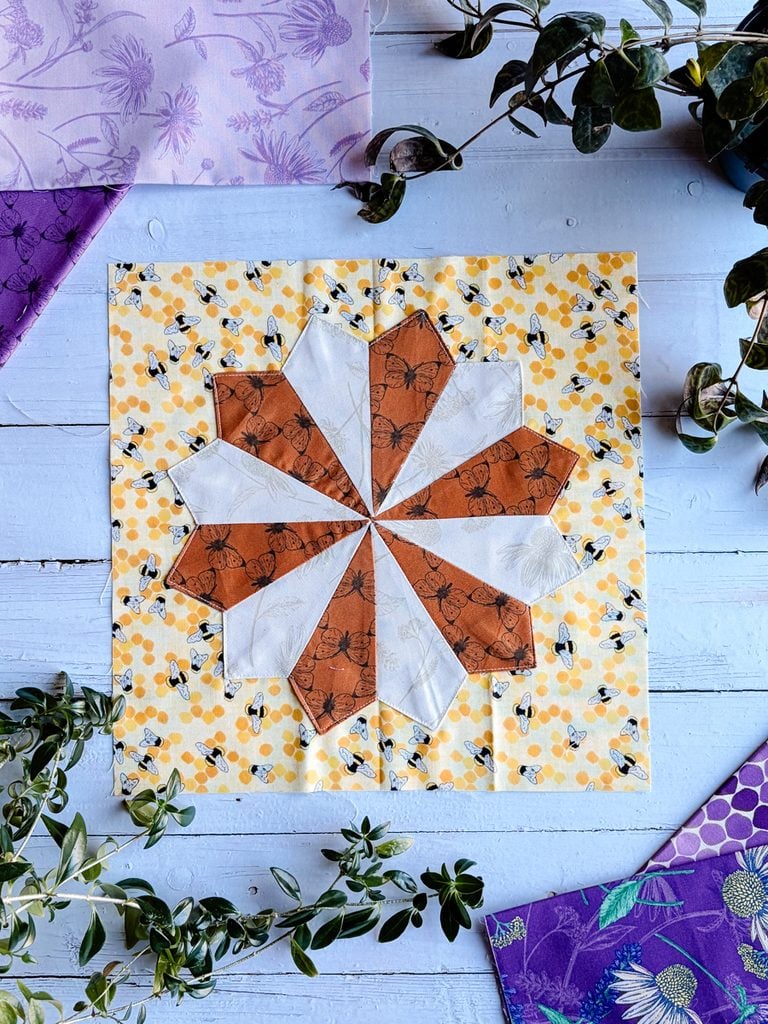
Just as the porcelain plates featured intricate designs radiating around a central area, the quilt block uses individual fabric pieces arranged in a circular formation. The resemblance is easy to see, especially in versions featuring colorful prints and a small circular center.
When Did the Dresden Plate Become Popular?
Although the Dresden Plate is often associated with quilts from the 1920s and 1930s, variations of the design appeared much earlier. Some of the earliest examples date back to the 1890s.
The pattern became especially popular during the 1920s and 1930s, when interest in traditional quiltmaking was growing. Pattern companies and needlework publications helped introduce designs to a wider audience, making it easier for quilters across the country to discover and recreate the same patterns.
In 1933, McCall’s published a Dresden Plate pattern that helped popularize a recognizable variation of the design. The pattern continued to circulate for years, and many quilters created their own versions by changing the number of blades, fabric combinations, and finishing details.
The Dresden Plate was also well suited to the fabric choices of the time. Quilters could combine a variety of small prints and leftover pieces, giving each plate its own personality. During the Depression era, colorful cotton prints, including fabrics made from repurposed flour and feed sacks, found their way into many quilts.
What Makes a Dresden Plate?
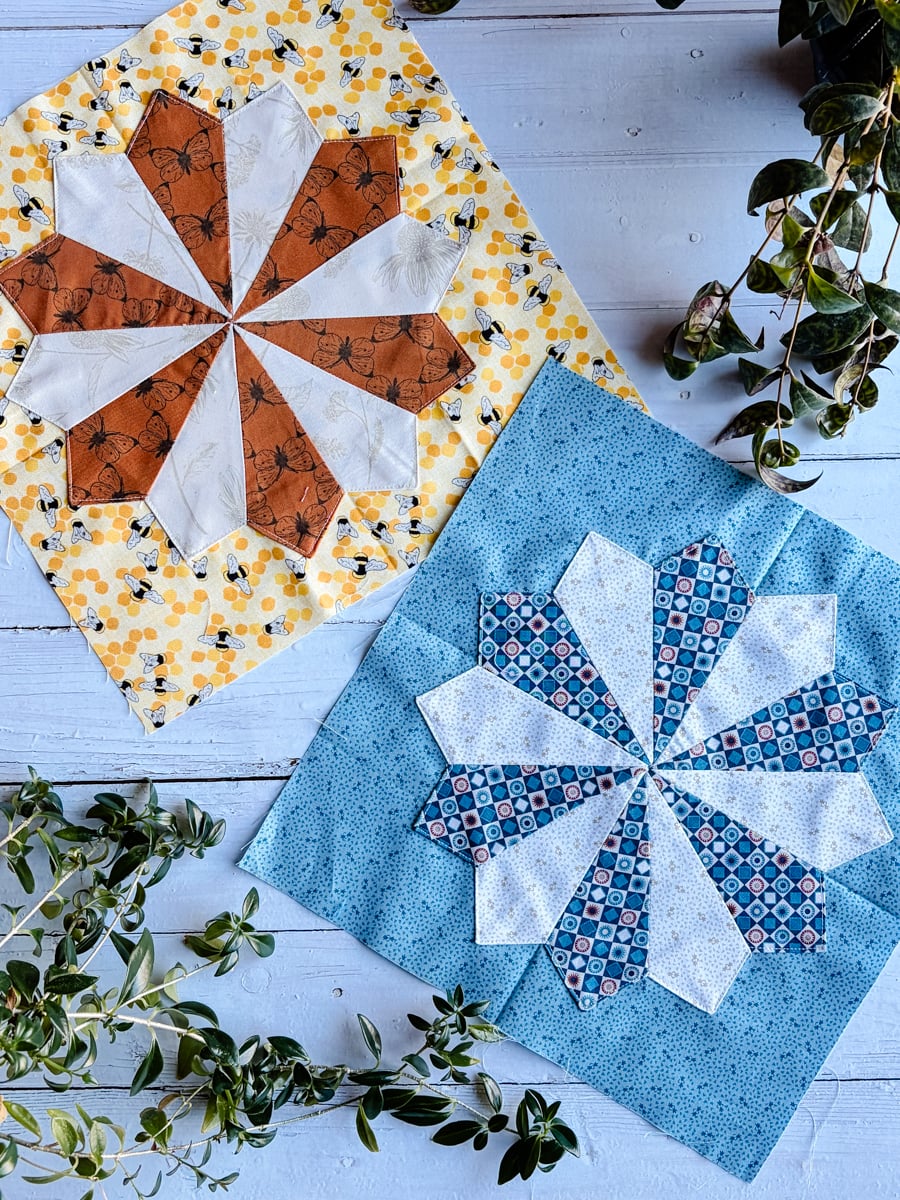
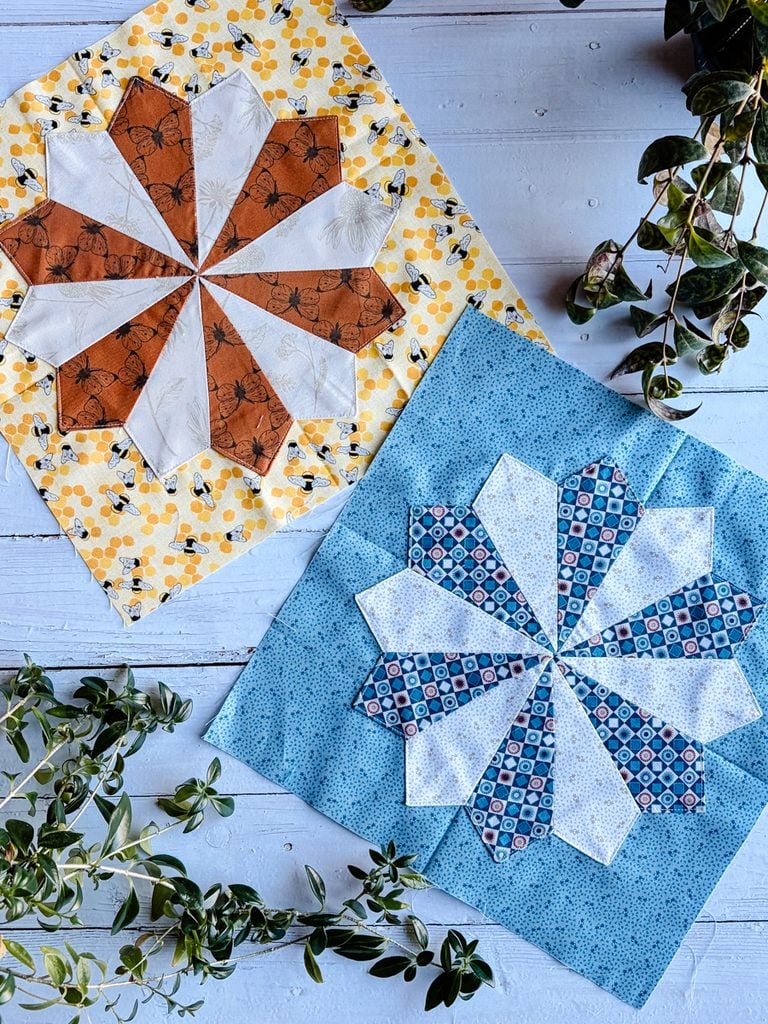
At its heart, the Dresden Plate is made from individual wedge-shaped fabric pieces arranged in a complete circle.
These pieces are commonly called blades, although they are sometimes referred to as petals because of their flower-like appearance. Typically, 16 to 20 blades are joined together to form the circular plate, although the number can vary depending on the pattern.
Once the blades are pieced together, the completed circle is appliquéd onto a background fabric. A small fabric circle is often added to the center to cover the point where all the blades meet.
There are several ways to shape the outer edges of the blades. Some Dresden Plates have rounded edges that create a soft, scalloped appearance, while others feature pointed edges for a more geometric look. These small differences can give the same traditional design an entirely different personality.
Dresden Blade, Dresden Fan, or Dresden Plate?
Although these names are sometimes used interchangeably, they describe slightly different parts and arrangements of the design.
- Dresden Blade: An individual wedge-shaped fabric piece used to construct the design. The blades are joined together to create the larger shape.
- Dresden Fan: A collection of blades arranged in a partial circle, creating the appearance of an open fan.
- Dresden Plate: Blades arranged in a complete circle, forming the familiar plate or flower-like design.
Understanding the difference is helpful when exploring vintage patterns or choosing a design for your next quilting project. The individual blade is the building block, the fan is a partial arrangement, and the plate brings the blades together into a full circle.
A Traditional Design with Endless Possibilities
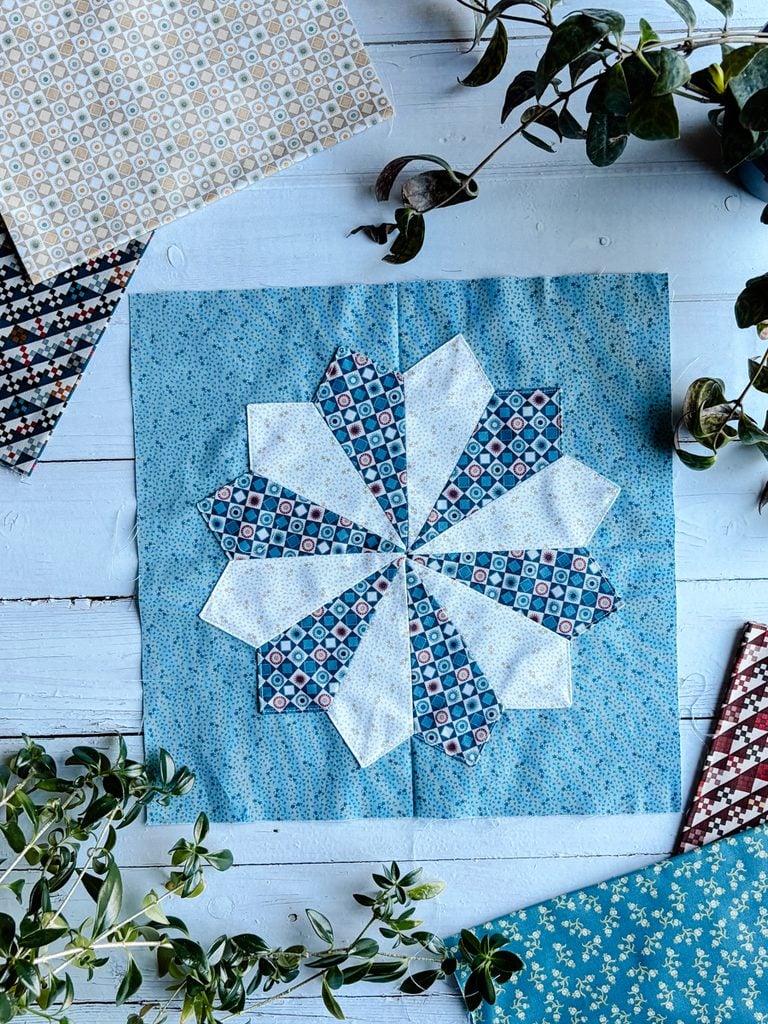
One of the reasons the Dresden Plate has remained a favorite among quilters is its versatility. The basic construction is recognizable, but the possibilities for making it your own are nearly endless.
Try combining small-scale floral prints for a traditional look, or choose bold colors and contrasting fabrics for something more contemporary. You can experiment with the number of blades, alternate rounded and pointed edges, or use a special fabric for the center circle.
The finished plates can be arranged individually within quilt blocks, joined together with sashing, or incorporated into larger quilt designs. Even a single Dresden Plate can become a beautiful focal point.
More than a century after its earliest examples appeared, the Dresden Plate continues to inspire quilters. Its combination of simple shapes, beautiful fabrics, and thoughtful construction is a wonderful reminder that some designs never go out of style.
Whether you’re making your very first Dresden Plate or adding another version to your collection, it’s fun to think about the generations of quilters who have enjoyed this same design before us.
Sometimes the most beautiful quilt designs are the ones that have a little history stitched into them.
History Repeats Itself Quilt-Along
The Dresden Plate is Block #11 in my History Repeats Itself Quilt-Along.
History Repeats Itself is a free quilt-along featuring traditional quilt blocks, with a new block released each month through the end of 2026.
If you’ve been following along, this is another opportunity to add a classic quilt design to your collection. And if you’re just discovering the quilt-along, you can still join in!
You don’t have to make every block in order, and you don’t have to know exactly what you’re going to do with your blocks yet. Think of it as building a collection of traditional quilt blocks while learning a little bit about the history behind them along the way.
Get the Free Dresden Plate Quilt Block
Ready to make your own Dresden Plate Block?
GET THE FREE DRESDEN PLATE PATTERN
More History Repeats Itself Quilt-Along Blocks
If you’re enjoying the History Repeats Itself Quilt-Along, be sure to check out the other traditional quilt blocks in the series.