Unearthed from 1929: The Hour Glass Quilt Block
A Quilt Block with Deep Roots
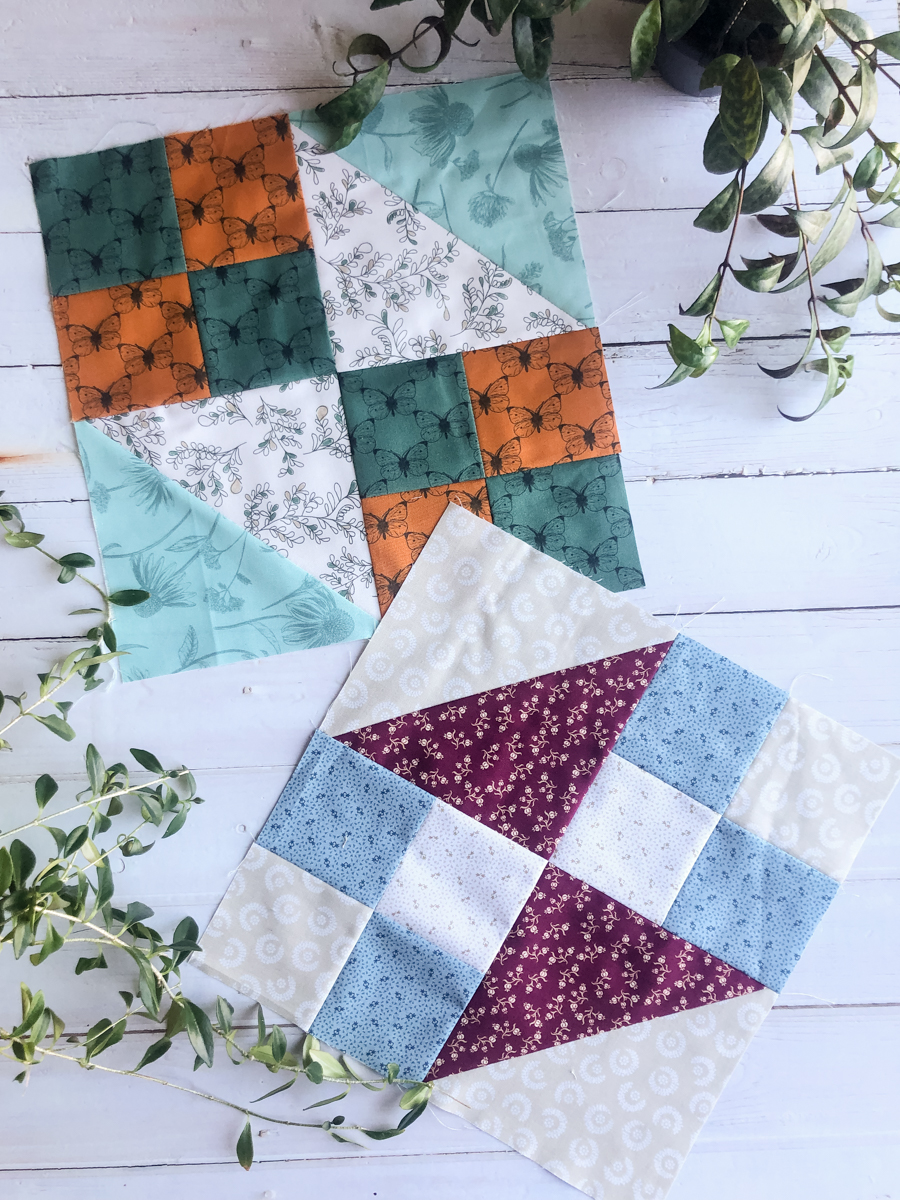
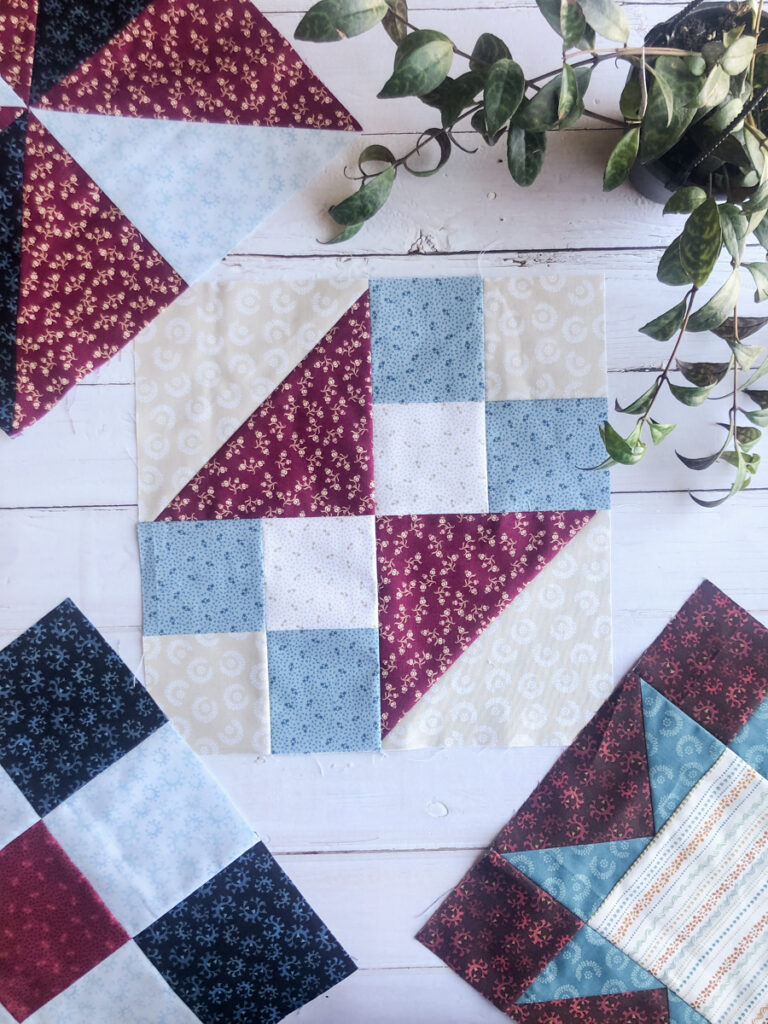
The Four Patch is one of those timeless quilt blocks that beautifully illustrates how simple units can come together to create something far greater than the sum of their parts. In the variation featured here—known as the Hour Glass when it appeared in Wallace’s Farmer in 1929—the design reflects a period when quilt patterns were widely shared through agricultural and household publications, connecting quilters across rural communities. According to documented quilt pattern indexes compiled by historian Barbara Brackman, this publication helps firmly place the block within a recognized historical timeline, showing that it is not just a traditional design, but one with a traceable origin in early 20th-century print culture.
A Glimpse into the Original 1929 Pattern
What makes this history even more meaningful is the original description published alongside the pattern. The Wallace’s Farmer article described the Hour Glass as “a quaint and old fashioned quilt design,” noting that the example quilt it was taken from was already nearly fifty years old at the time. The designer, Mrs. Emma Tyrrjell, suggested a three-color layout with white, carefully explaining how the two large triangles form the hourglass shape, while the diagonal line of darker squares represents the sand filtering through it. She also provided precise cutting measurements, with triangles made from half of a 5-inch square and smaller squares cut at 2½ inches—reminding quilters, as always, to allow for seam allowances.
Many Names, One Design
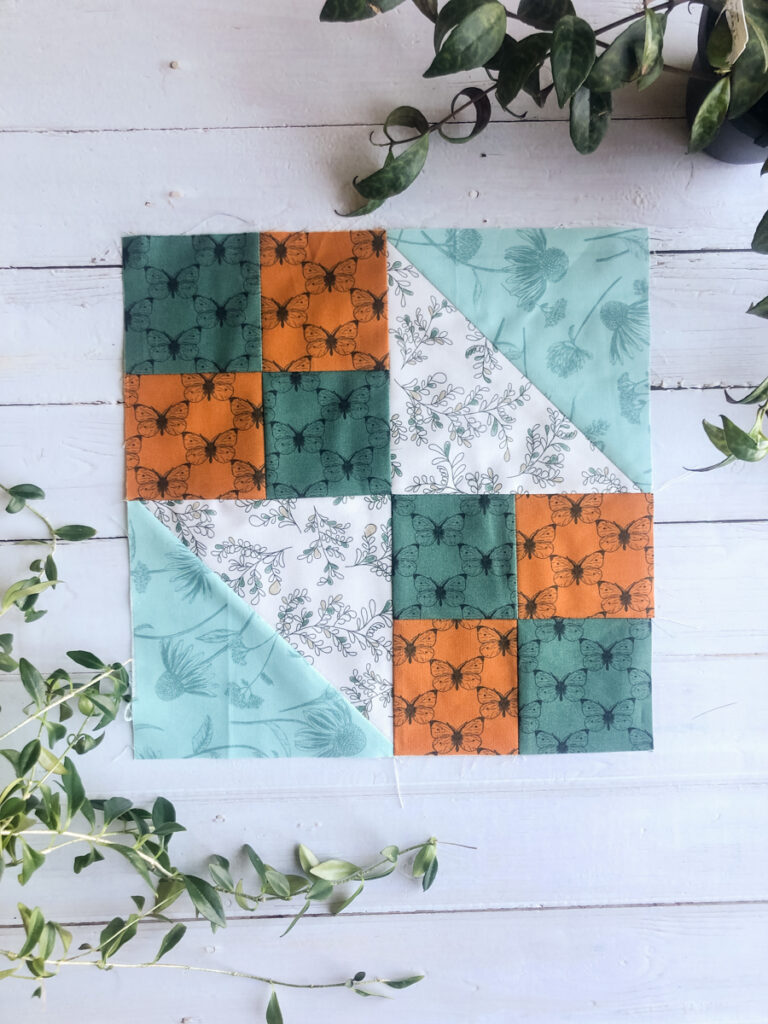
This block’s enduring appeal is also reflected in its many alternate names, including Jacob’s Ladder, Double Four Patch, and Buckeye’s Beauty. Quilt block names were rarely standardized, and the same design often appeared under different names depending on the region, publication, or even the maker’s personal interpretation. In some cases, slight variations in color placement or construction led to entirely new names, even when the underlying structure remained the same. This fluid naming tradition offers a glimpse into how quilt patterns were shared organically, evolving as they moved from one community to another.
Simple Units, Dynamic Design
At its core, this block combines two foundational quilting elements: the four-patch and the half-square triangle (HST). The structured grid of the four-patch provides a sense of balance and stability, while the diagonals of the HST units introduce movement and visual interest. This interplay creates a design that feels both orderly and energetic, offering quilters endless opportunities to experiment with color, contrast, and placement.
Then and Now: Quilting Through the Years
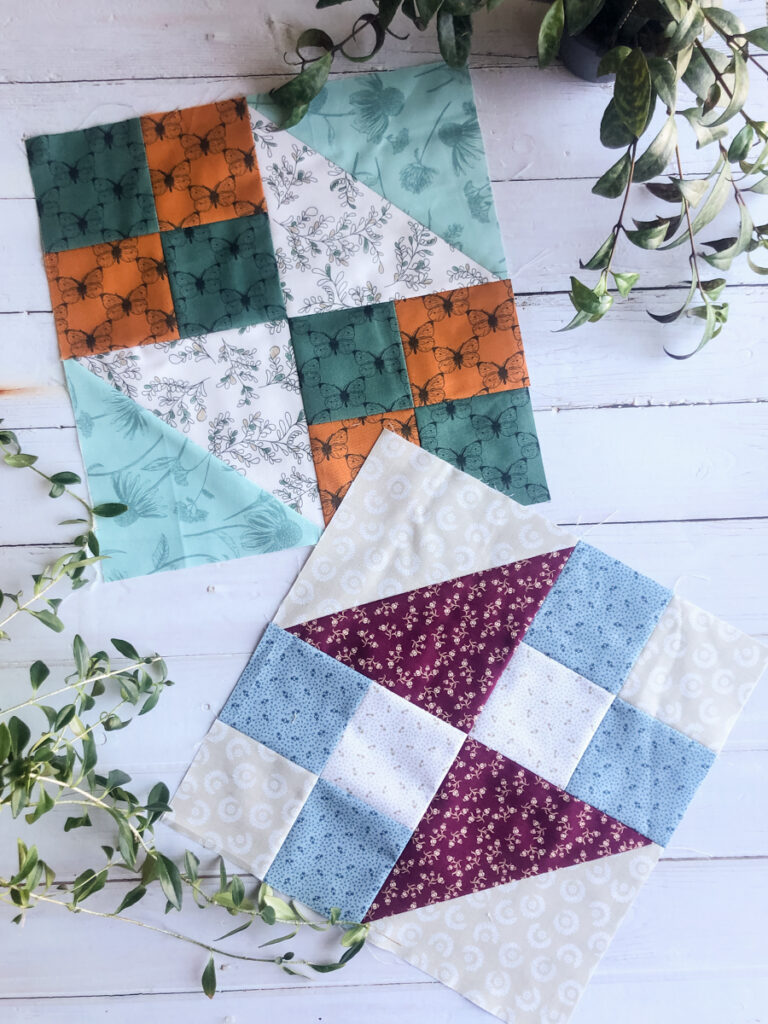
Looking back at the original publication also highlights just how much quilt pattern writing has evolved. Patterns like this were often hand-drawn, with templates and instructions sketched rather than digitally produced. Quilters relied on careful measurement, drafting, and experience to bring these designs to life. While today’s tools and technology have made quilting more precise and accessible, the skill and craftsmanship of those earlier quilts remain just as impressive. There is something especially meaningful about recreating a design that was once shared in print nearly a century ago—and knowing that, even then, it was already considered a cherished tradition.
Practicality Meets Creativity
Historically, blocks like this were especially valued for their practicality. Quilters often worked with whatever fabrics they had on hand, and the Four Patch lent itself naturally to scrap quilting. Small pieces could be repurposed into four-patch units, while coordinating scraps could be paired to form HSTs, ensuring that little went to waste. This resourcefulness not only made quilting more economical but also infused each quilt with layers of meaning, as fabrics from clothing or earlier projects were given new life.
Endless Possibilities
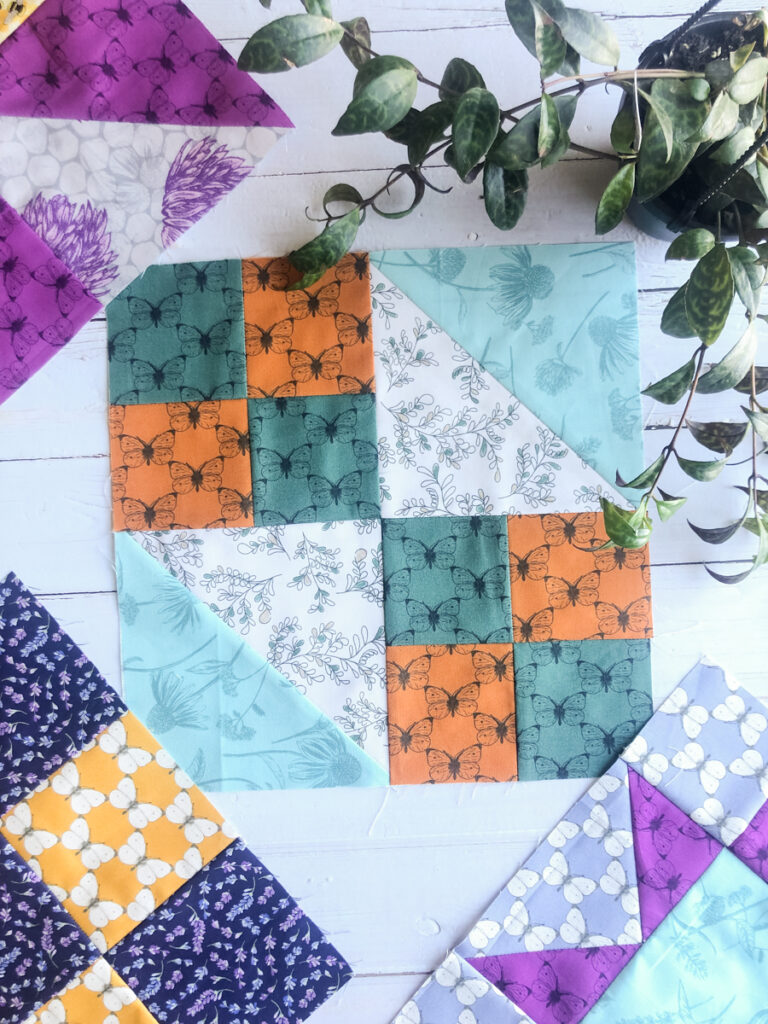
What truly sets this block apart is its versatility. By rotating or repeating the units, quilters can create secondary patterns—chains, stars, or even optical illusions—that emerge across the quilt top. Whether arranged in a traditional setting or given a modern twist with bold fabrics and high contrast, the Four Patch continues to inspire creativity. It stands as a beautiful reminder that even the simplest designs can carry a rich history while still offering endless possibilities for reinvention.